

The Road to Tofino: Where the Journey Becomes the Story
There’s something about the drive to Tofino that stays with you long after the trip is over. Maybe it’s the way the air shifts from inland stillness to salt-tinged breeze, or how the forest slowly thickens into something older, quieter, and more alive. Or maybe it’s that the road itself; winding, narrowing, revealing – asks you to slow down and pay attention. Here are the 3 best stops en route to Tofino!
Because getting to Tofino isn’t just a means to an end. It’s part of the experience.
On your next road trip to the coast, you’re invited to join us in embracing the Tofino Destination Stewardship Plan, inspiring travel that is rooted in the principle of ʔiisaak – respect. Visitors are welcomed and encouraged to care for the land, water, wildlife, and community that make this place what it is. The journey itself is the first opportunity to begin travelling with that awareness.
Snow Creek Rest Stop: A First Pause
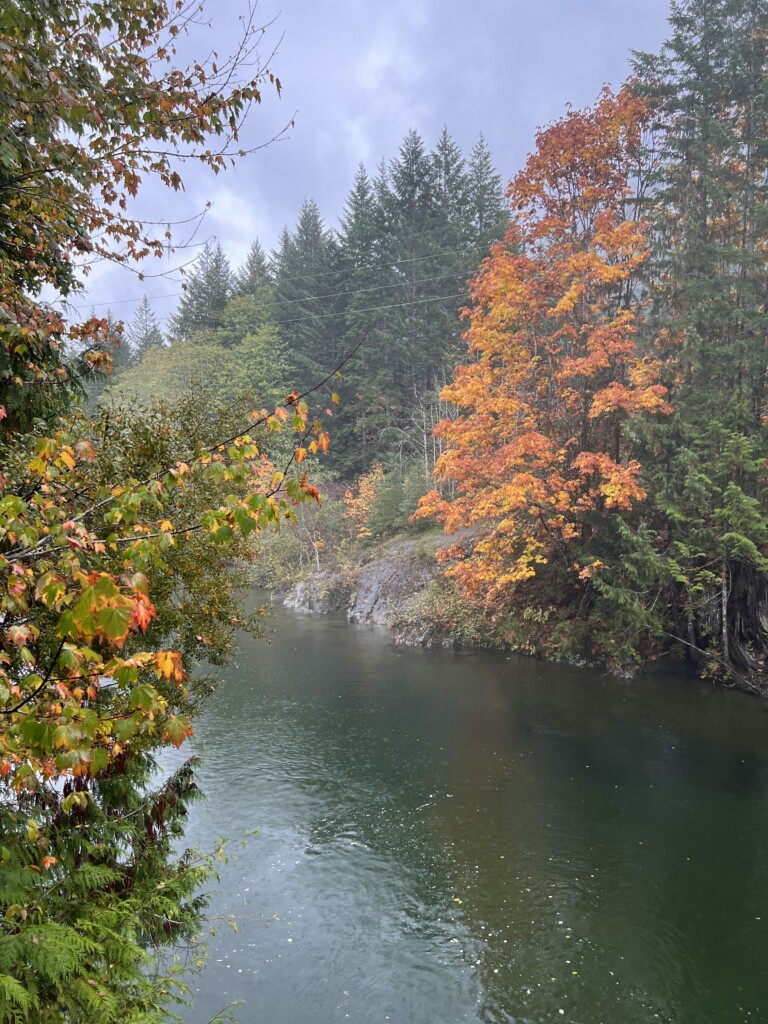
Not far along the route, past the town of Port Alberni, and within the traditional territory of the Tseshaht and Hupacasath First Nations, the Snow Creek rest stop offers one of the first invitations to step out of the car and into the rhythm of the holiday. Towering evergreens frame the space, their scale immediately reminding you that you’ve entered a different kind of landscape – one shaped by time, rain, and resilience.
It’s the last place to check your messages (free wifi), a place to stretch your legs, take a breath, and begin letting go of wherever you came from.
Settle in the space and embrace the peace. Calm nerves are needed for the winding highway ahead. It’s also a moment to shift your mindset, from visitor to steward.
Wally Creek Bridge: Into the Wild
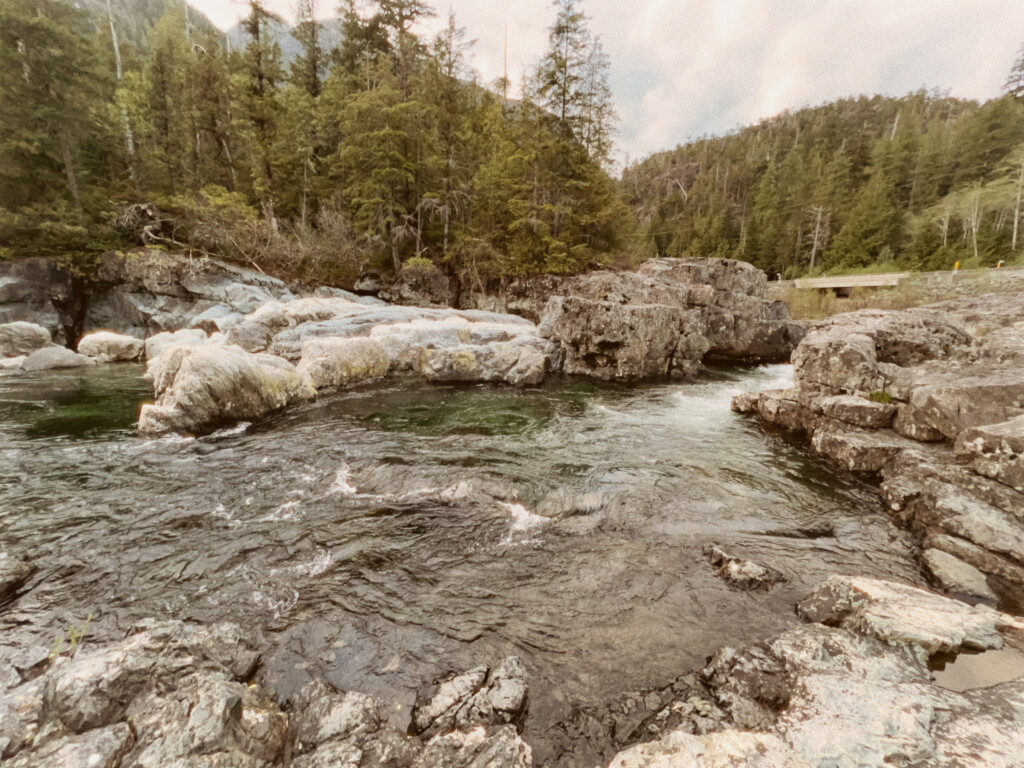
The third of 3 best stops en route to Tofino is further along. The crossing at Wally Creek is impossible to ignore. The bridge spans a dramatic canyon carved by water over thousands of years, with the Kennedy River rushing below. It’s the kind of place that makes you instinctively slow down – not just for the curves, but for the view.
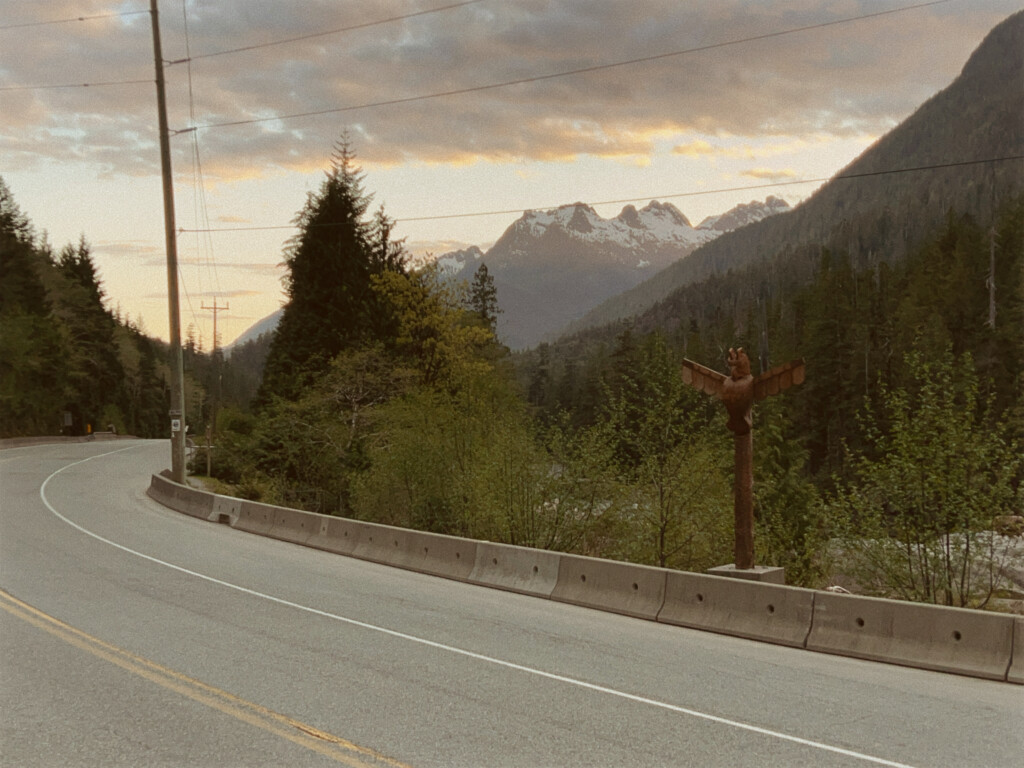
This area lies within the ʔaʔukmin Tribal Park, stewarded by the Tla-o-qui-aht First Nation. While “Wally Creek” is the name most travelers recognize, the landscape here is part of a much deeper cultural geography. The surrounding watershed, including the Kennedy River, is part of a living system of knowledge, language, and relationship. In Nuu-chah-nulth worldviews, places are not simply named, they are understood through their characteristics, histories, and connections to people over generations. The name ʔaʔukmin (also written haʔukmin) comes from the Nuu-chah-nulth language of the Tla-o-qui-aht First Nation and translates to “feasting bowl.”
Travelling through this area is not just scenic, it is a passage through Indigenous territory that continues to be actively stewarded and cared for.
Haʔuukmin (Kennedy Lake) Lookout & Boat Launch: Water, Sky, and Stillness
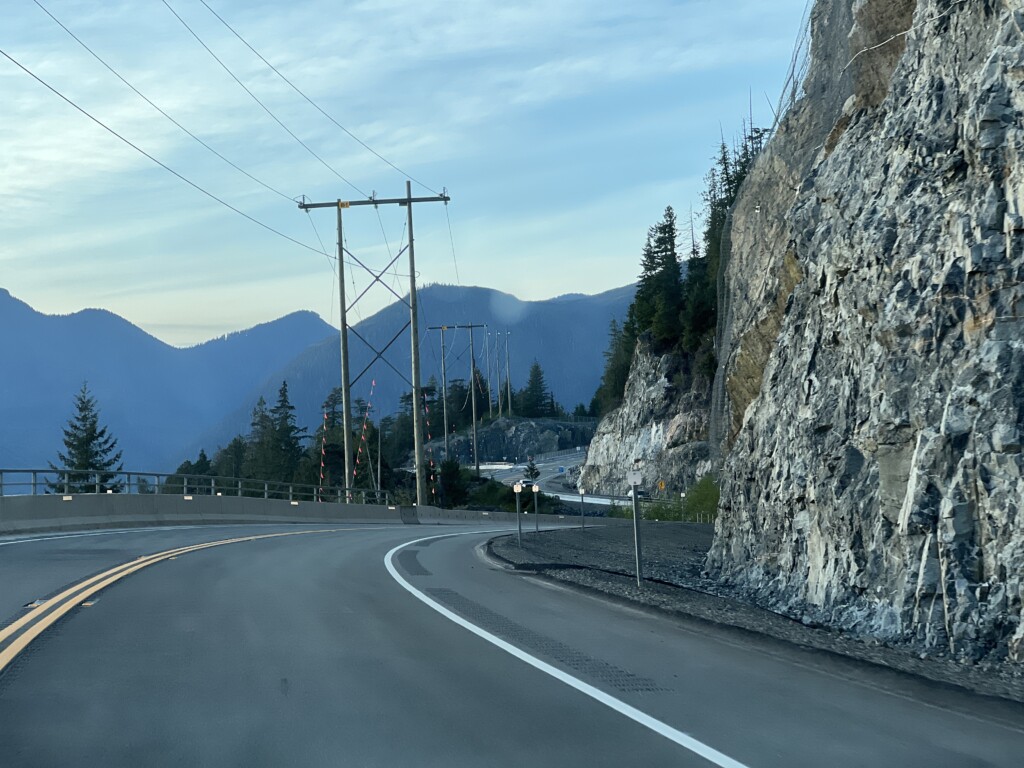
As the road continues, the forest opens up to reveal Kennedy Lake Provincial Park – home to one of the largest lakes on the island. The lookout and rest area offer a sweeping view across the water, often glassy and still, reflecting the surrounding mountains like a mirror. Looking out from the top of the hill, the land before you is within the ʔaʔukmin Conservancy (pronounced ah-OOK-meen) and is a protected area in British Columbia, formally established on June 18, 2024. It encompasses approximately 11,267 hectares, including much of the land between the two arms of Kennedy Lake, as well as the area extending between Clayoquot Arm Provincial Park and Clayoquot Plateau Provincial Park. To the northwest, it connects with the Unaacuł-Ḥiłsyakƛis Conservancy.
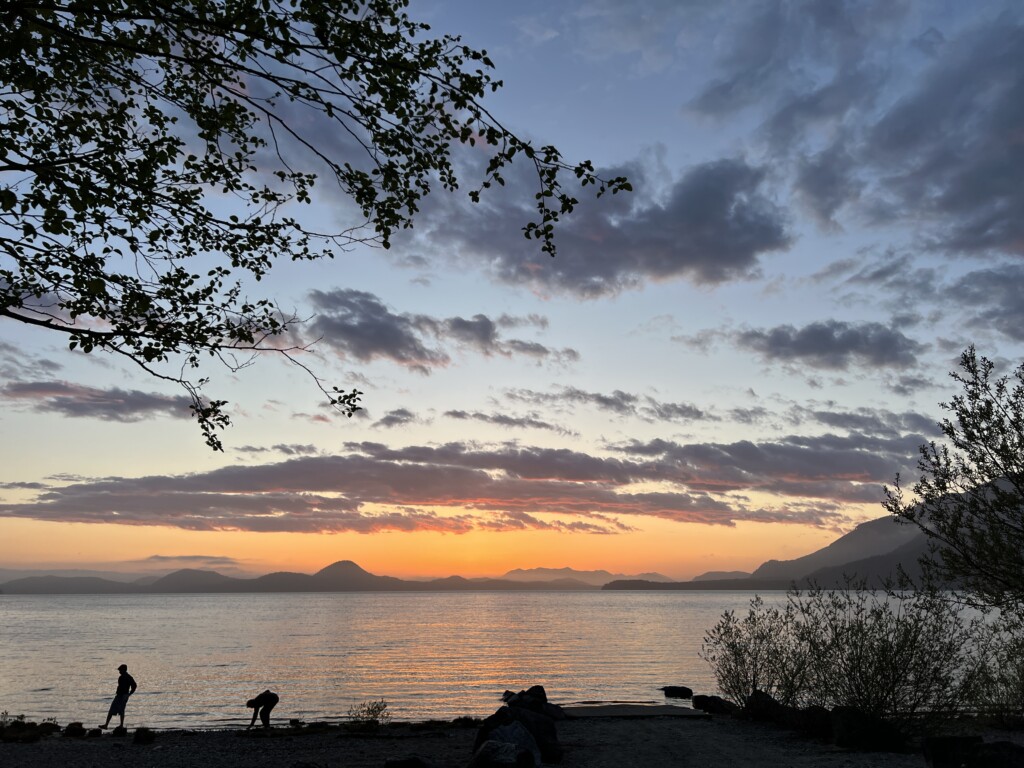
This stop (“Kennedy Lake Boat Launch”) provides a closer connection to the shoreline. It’s a place where the pace drops even further. You might see someone quietly launching a kayak, or simply sitting at the edge of the lake, taking it all in.
Moments like this invite a deeper appreciation, not just of beauty, but of balance.
Travelling with Respect
The Tofino Destination Stewardship Plan makes it clear: tourism here must do more than simply exist, it must contribute positively. Visitors are encouraged to learn about the place they are entering, minimize their impact, and leave it better than they found it.
That can begin on the drive.
It means taking your time, staying on designated pullouts, respecting wildlife corridors, leaving no trace, supporting local communities, and recognizing that this is not an untouched wilderness, but a lived-in, culturally rich landscape shaped by generations of stewardship.
The Road as a Ritual
By the time you reach Tofino, something has shifted. The stops along the way (Snow Creek, Wally Creek, Kennedy Lake) aren’t just breaks in the drive. They’re part of a gradual transition, a kind of unfolding. The road has done its work.
You arrive not just at Ocean Village, a destination, but in a different state of mind; more present, more aware, and more connected to the place you’ve traveled through.
And that’s the thing about Tofino: it doesn’t begin when you get there. It begins the moment you turn onto the road and choose a conscious journey.

